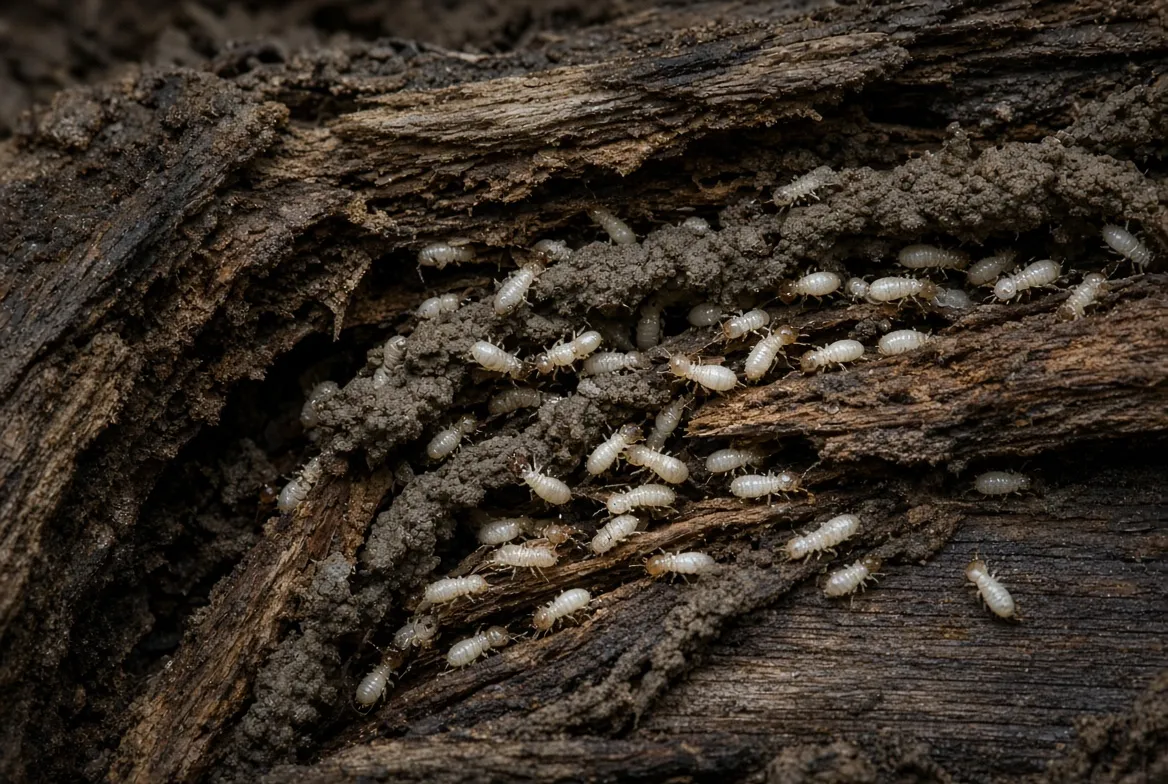
Inspections cover foundations, mud tubes, crawl spaces, and interior wood. Treatment recommendations are based on the inspection, not a packaged upsell.
Wood-destroying insect reports for real estate transactions are available when requested at scheduling.
Preventive monitoring can be added to a residential protection plan after treatment.
Signs you may need termite inspection and treatment
- Winged insects or shed wings near windows, doors, or lights
- Pencil-width mud tubes on foundation walls, piers, or in crawl spaces
- Wood that sounds hollow or crumbles when probed
- Bubbling paint or small pinholes in drywall or trim
What to do first
- 1 Save a few specimens in a sealed container or take a clear photo.
- 2 Do not disturb mud tubes before the inspection.
- 3 Note where and when you saw swarmers.
- 4 Request a WDI report early if you are buying or selling a home.
How the service works
-
01
Inspect
Foundation, crawl space, basement, and interior wood, with findings documented.
-
02
Recommend
Treatment options based on what the inspection found, not a packaged upsell.
-
03
Monitor
Preventive monitoring can be added to a protection plan after treatment.
Termites service near you
Pest control in Weirton, WV, Steubenville, OH, and Follansbee, WV. See all nine service towns →
Buying or selling? See WDI inspections for real estate →
Read the guide
FAQ
Termites questions
How do I recognize termites?
Mud tubes, damaged wood, or winged swarmers indoors are the most common signs. Contact the office before disposing of specimens.
Do you provide WDI reports?
Yes. Request a wood-destroying insect report when the visit is scheduled.
Which counties are affected?
Subterranean termites are established in Jefferson, Belmont, Brooke, and Ohio counties.