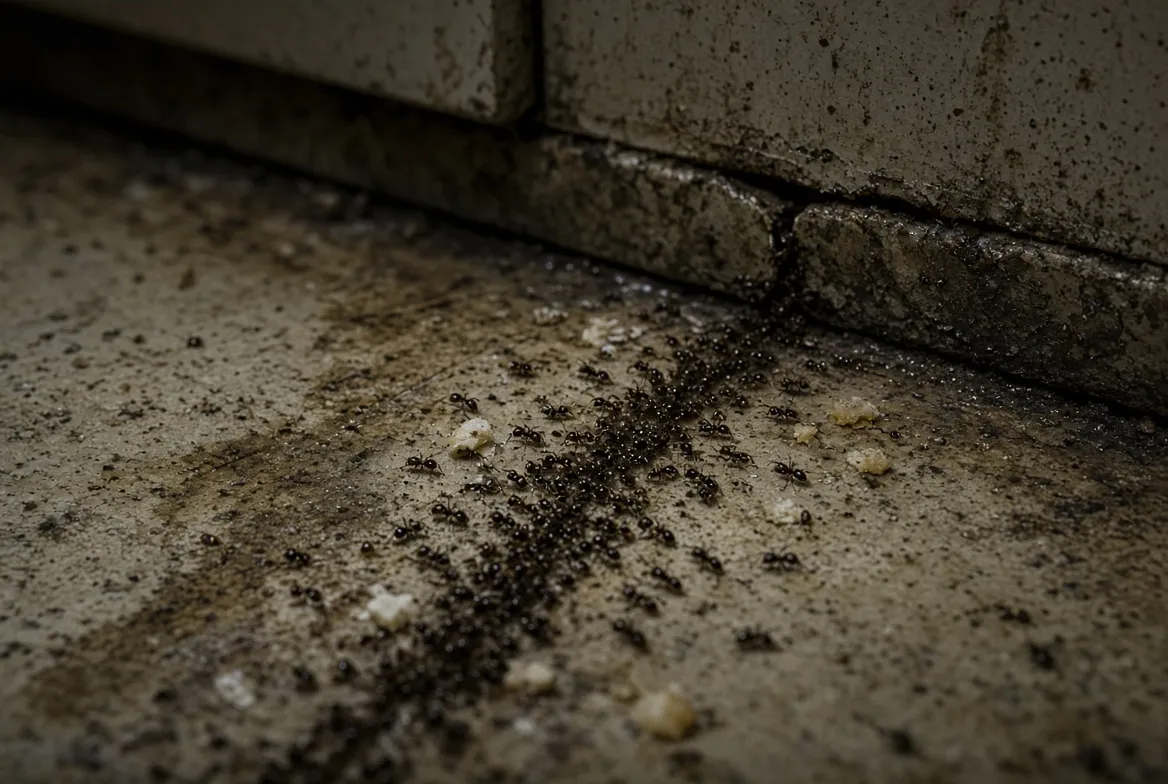
Effective ant control traces activity back to the colony rather than treating only the visible trail. Service includes interior and exterior inspection, targeted treatment, and recommendations for ongoing prevention.
Carpenter ant activity — larger ants and frass around window frames or fascia — is inspected as a structural concern, not a kitchen nuisance.
Residential protection plans are designed to limit seasonal reinfestation common to Ohio Valley properties.
Signs you may need ant control
- Steady trails along counters, baseboards, or foundation cracks
- Small soil mounds in pavement joints, patios, and driveways
- Large black ants indoors in spring, or sawdust-like frass near wood
- Winged ants emerging inside the house
What to do first
- 1 Wipe up food and sweet residue, but avoid spraying along the trail.
- 2 Note where you see activity and what time of day.
- 3 Fix leaks and trim shrubs or mulch away from the foundation if you can.
- 4 Tell us if you see large ants or frass so the inspection includes structural areas.
How the service works
-
01
Inspect
Interior and exterior, following trails back toward the nest or harborage.
-
02
Treat
Targeted treatment aimed at the colony, not just the ants you can see.
-
03
Follow up
Recommendations for moisture, entry points, and a protection plan to limit seasonal return.
Ants service near you
Pest control in Follansbee, WV, Mingo Junction, OH, Weirton, WV, Toronto, OH, Wintersville, OH, and St. Clairsville, OH. See all nine service towns →
Identify the species: the ants pest guide →
Read the guide
FAQ
Ants questions
Why does activity return after a store spray?
Retail products interrupt the visible trail. The colony is usually in a void, slab crack, or exterior harborage.
Do you treat carpenter ants?
Yes. Identify carpenter ant signs when you schedule so the inspection includes structural areas.
Is ongoing service recommended?
Often, yes. A recurring plan is the steadiest way to keep seasonal ants from coming back.