

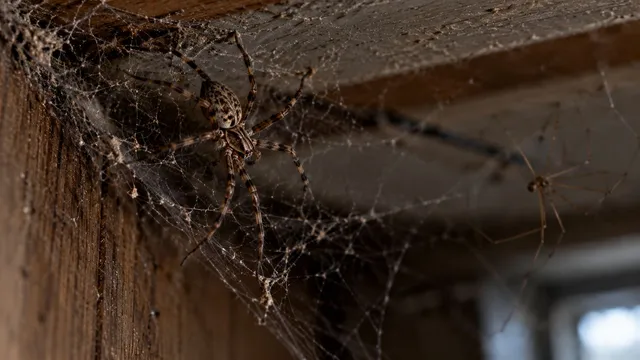
Identify spiders
House spiders
Brownish with a rounded abdomen, they build tangled webs in corners, closets, and garages.
Cellar spiders
Pale and long-legged, they hang upside down in loose webs in basements and crawl spaces.
Wolf spiders
Hairy, brown, and fast, they hunt on the ground rather than in webs and often get inside through gaps at doors in fall.
Signs you have spiders
- Webs building back up days after you clear them
- Egg sacs tucked in corners and under furniture
- Spiders that keep turning up near windows and door thresholds
- Lots of small insects collecting at lights, which feeds the spiders
Why they come inside
Spiders follow their food. Gaps around doors, bright exterior lights that draw insects, and clutter all give them reasons to settle in.
How Go Go treats them
After an inspection we treat the places spiders hide and travel, clear webbing and egg sacs where we can, and look at the insect activity that supplies the food. Sealing entry gaps is part of keeping them out.
Covered by a protection plan?
Yes. Spiders are on the plan, so seasonal visits keep webs and their food supply in check. See how plans work →
FAQ
Spiders: common questions
Are the spiders in my house dangerous?
Most are not. A few can give a painful bite. If you think you have one of those, keep your distance and call us, and see a doctor if you are bitten.
Why do I get so many spiders in fall?
Many wander indoors in fall as temperatures drop, and males roam more while looking for mates.
Does clearing webs make them go away?
Only for a while. Clearing the web without addressing food and entry points means they rebuild.